














2026 Canadian Pet Shopping Report
How Canadians Feed, Shop, and Spend on Their Pets
About This Study
Caddle surveyed more than 10,000 Canadian adults and analyzed responses from 2,184 dog and cat owners responsible for pet-related purchases. The study examines pet ownership, shopping habits, spending patterns, feeding behaviors, brand loyalty, trusted information sources, and future market trends.
Download the full report to explore detailed consumer data, category trends, purchase drivers, and retailer insights.
🟨 Key Findings
Pets are family: 87% of pet owners consider their pet a full family member.
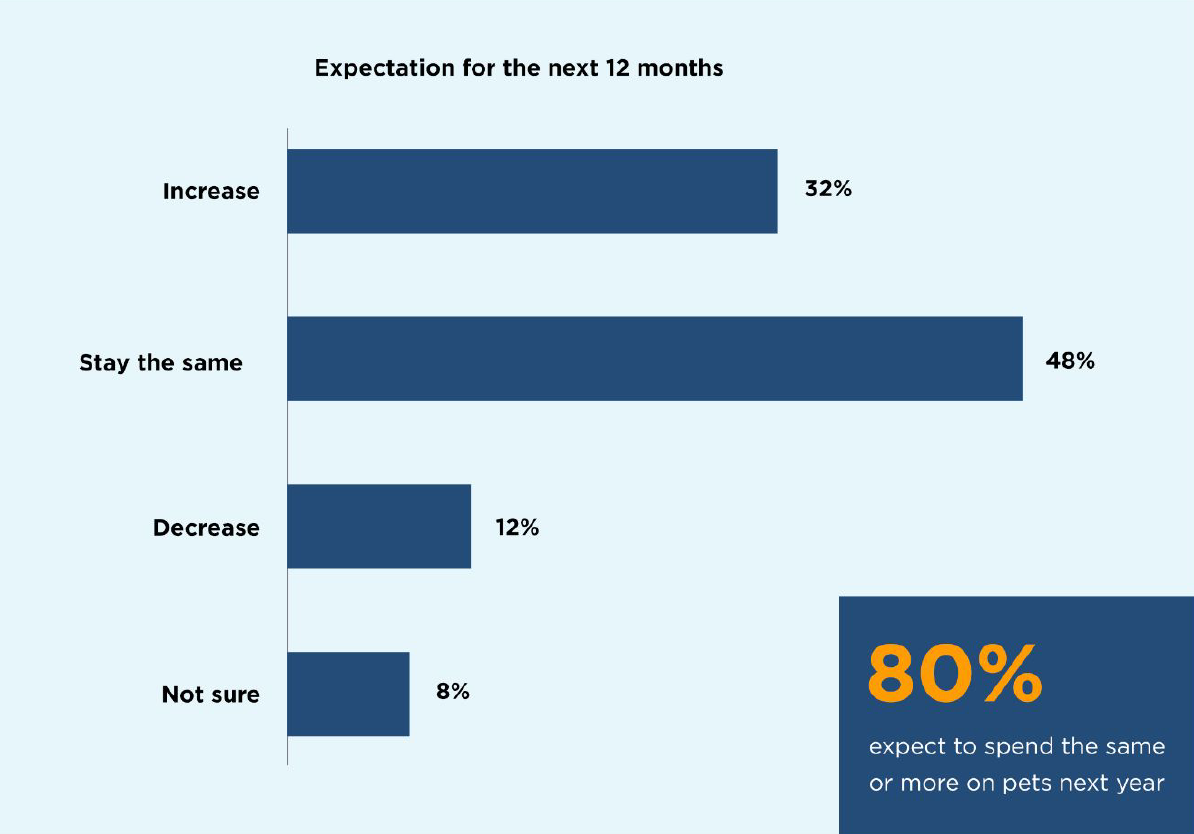
Pet spending is resilient: 80% expect to maintain or increase spending over the next year.
Price matters, but isn't everything: Price/value is the top factor in food selection, but rarely the main reason for switching brands.
Specialty retailers lead: Pet specialty stores remain the primary shopping destination for many pet owners.
Online shopping is now routine: More than 4 in 10 regularly purchase pet food online.
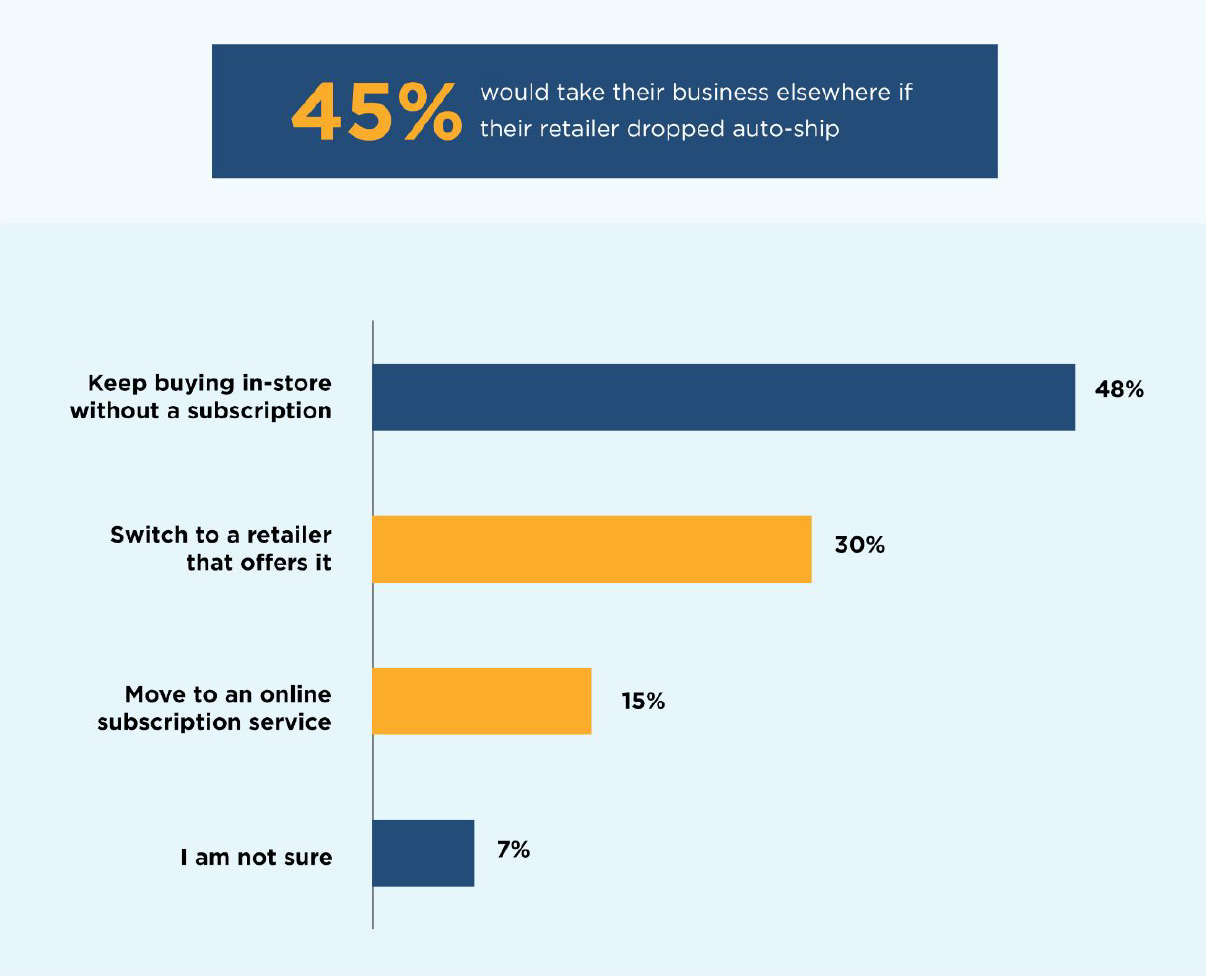
Auto-ship drives loyalty: Nearly half would consider switching retailers if subscription services disappeared.
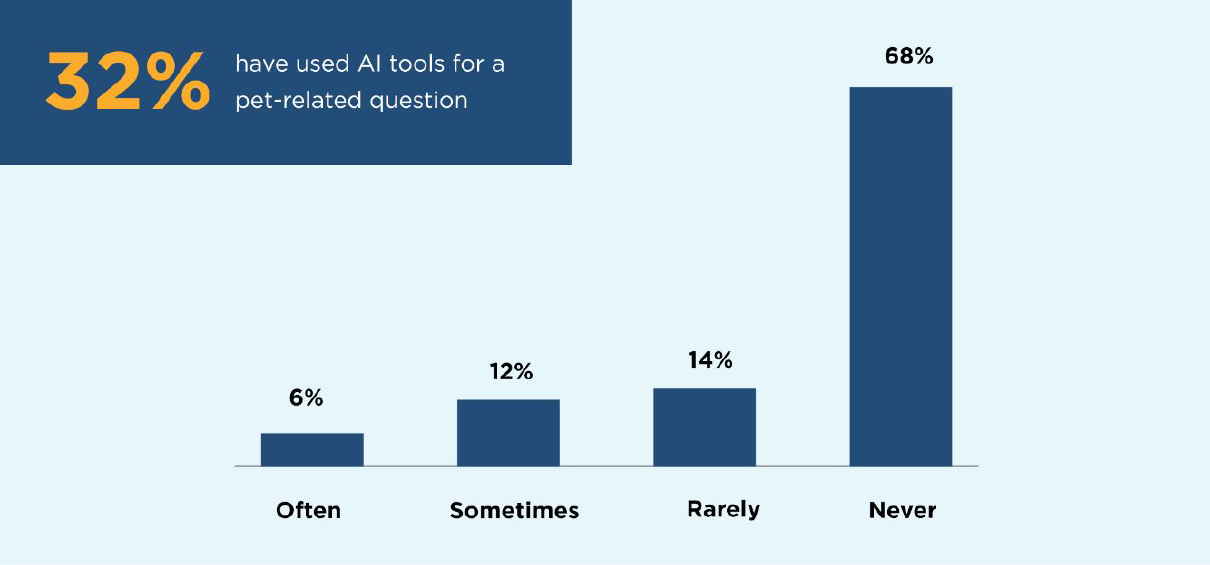
Veterinarians remain the most trusted source: AI tools are emerging as a supplemental source of pet-care information.
🟩 The Canadian Pet Landscape: Pet Ownership, Regionality, and Passion
Who owns pets, where they live, and how deeply they care
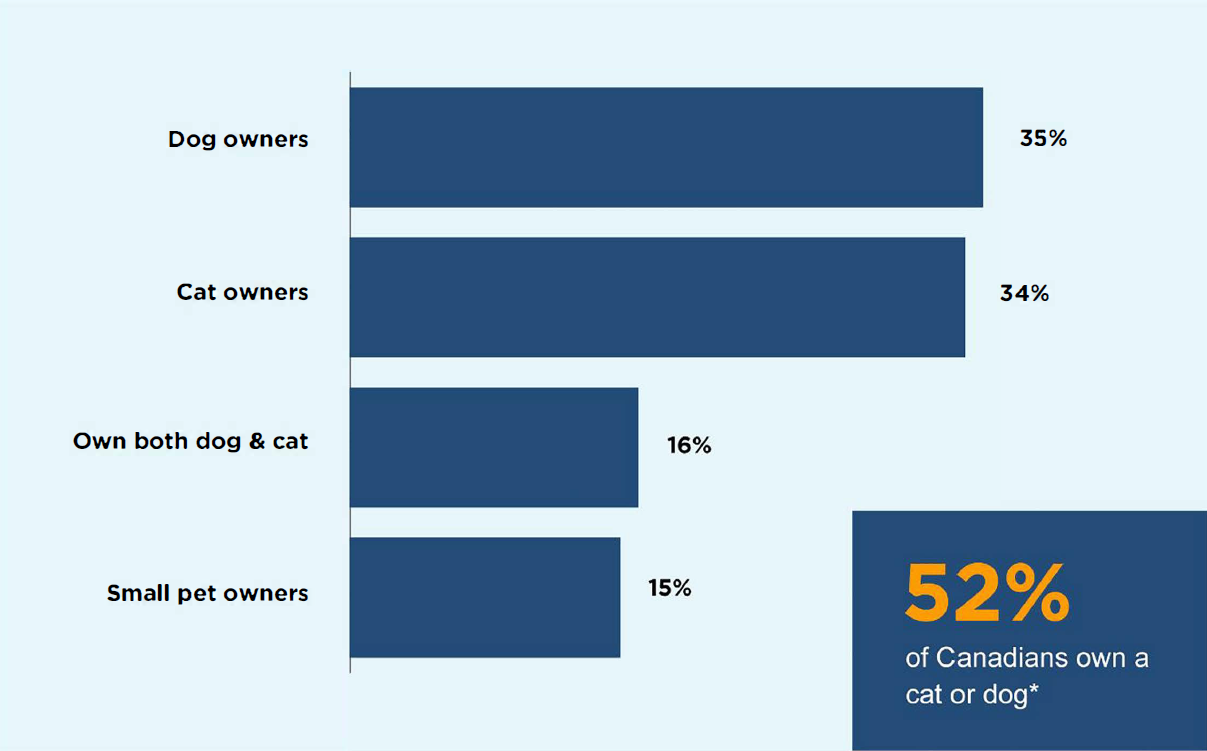
More than half of Canadian households own a dog or cat, with dog ownership at 35%, cat ownership at 34%, and 16% owning both. Pet ownership remains consistent across the country and represents a significant consumer market.
Where you live shapes what you own: Prairies skew dog, Quebec skews cat
Regional differences influence pet ownership patterns:
Prairie provinces have the highest dog ownership (40%).
Quebec has the highest cat ownership (41%).
Regional preferences can influence product assortments and local marketing strategies.
A 15% niche worth watching: small pet owners lean to specialty
Small pets are owned by 15% of Canadians.
Most common small pets include:
Fish (48%)
Birds (23%)
Reptiles (9%)
Nearly half of small pet owners primarily shop at pet specialty retailers.
For 9 in 10 owners, the pet is family
87% agree their pet is a full family member.
58% strongly agree.
This emotional bond underpins many shopping and spending decisions throughout the report.
🟦 Spending & Economic Pressure: What Pet Parents Spend
What pet parents spend, and what they would sacrifice first
Pet spending remains remarkably durable despite economic challenges.
The typical household spends $50–$99 a month on pet essentials
32% spend between $50–$99 monthly on food, treats, and litter.
More than one-third spend $100 or more monthly.
Premium spending remains common among pet owners. (Image: Online shopping and subscription adoption)
🟫 Where & How They Shop: Channel Preferences & Why
The channels pet parents choose, and why
Specialty leads the main stop, but shoppers spread across channels
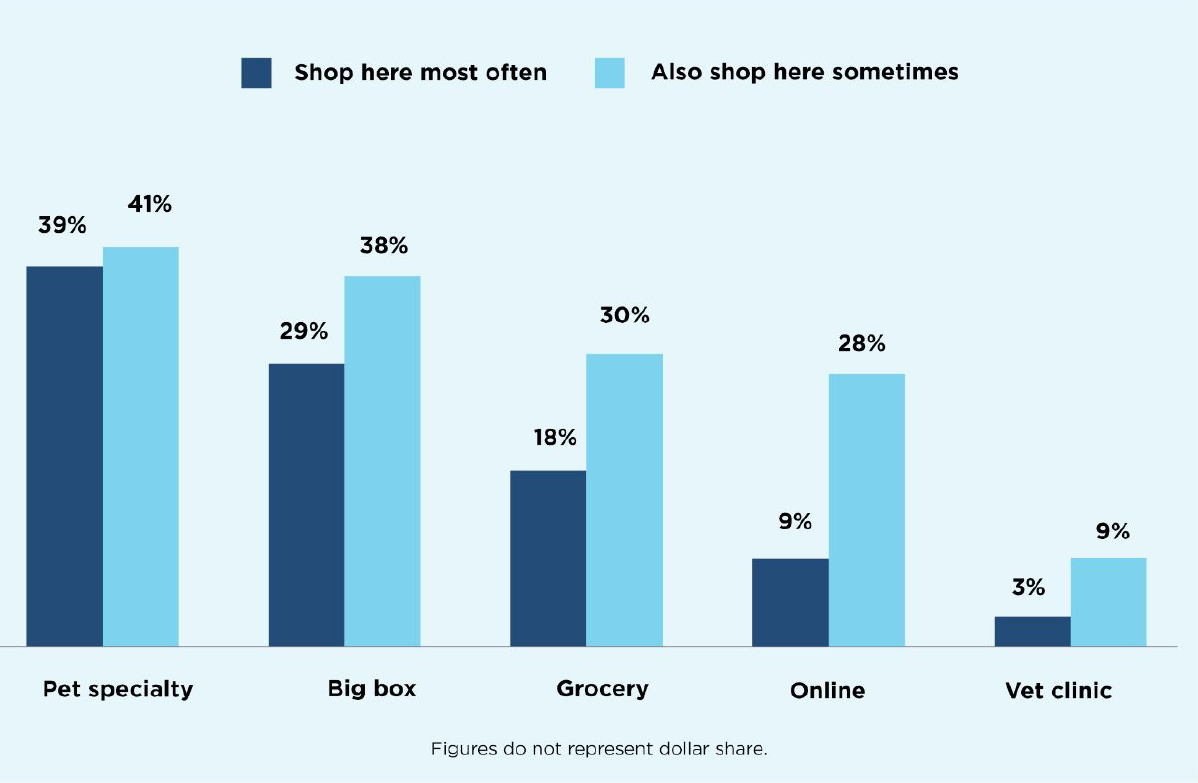
Pet specialty stores remain the leading primary shopping destination for pet owners, but shoppers frequently supplement purchases through alternative channels.
Primary shopping destinations:
Pet specialty stores: 39%
Big box retailers: 29%
Grocery stores: 18%
Online retailers: 9%
Veterinary clinics: 3%
Within specialty, Pet Valu and its peers lead the pack
Among shoppers who primarily purchase from pet specialty retailers:
43% shop most often at Pet Valu, Mondou, or Global Pet Foods
31% shop most often at PetSmart
26% shop most often at another specialty retailer
1 in 3 pet parents tried a new channel this year
Shopping habits remain relatively stable, but Canadian pet owners continue to explore new ways to buy pet products.
In the past year:
31% tried a new channel for purchasing pet food or treats
69% stayed with their usual shopping channels
🟪 Online & Subscription: The Convenience & Retention Battleground
The Convenience & Retention Battleground
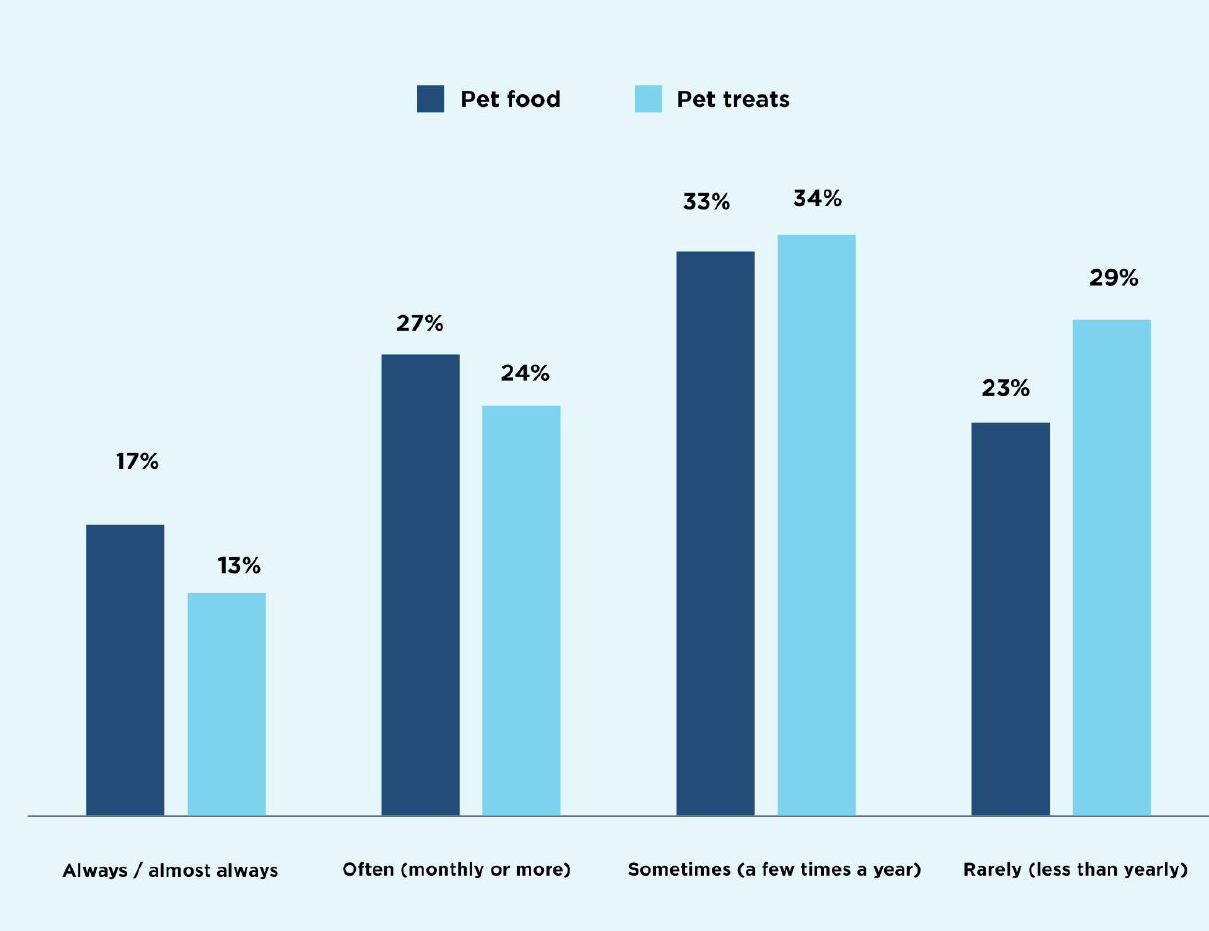
Buying pet food online is now routine for more than 4 in 10
44% regularly purchase pet food online.
37% regularly purchase pet treats online.
Online purchasing has become an established habit for many pet owners.
41% of pet owners currently use auto-ship, while an additional 18% are interested in enrolling.
Subscription programs drive customer loyalty, with many shoppers indicating they would consider switching retailers if auto-ship options were removed.
🟩 Food & Feeding Behavior: What's in the Bowl & Why
What is in the bowl, and why owners choose it
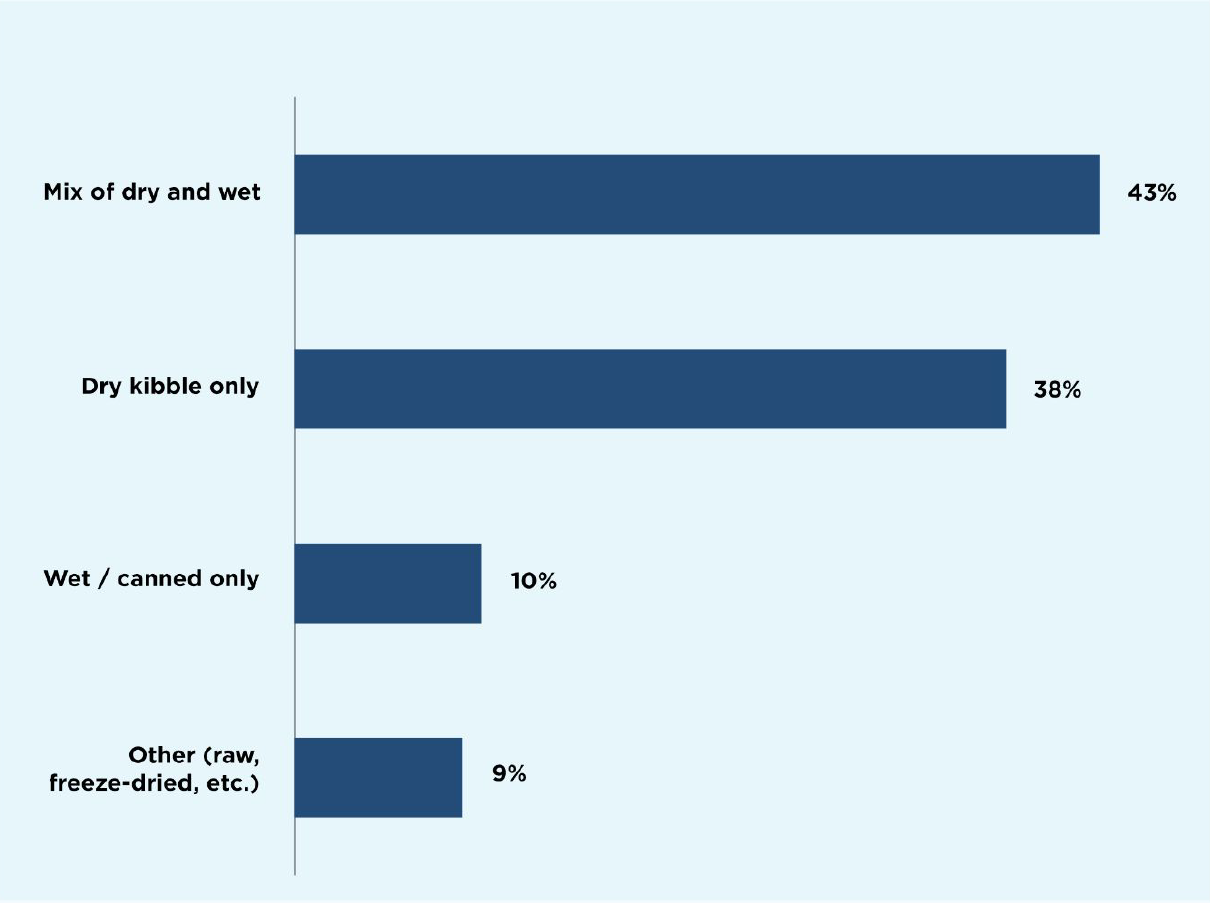
Flexible feeding is the most common approach combining both dry and wet food.
Many pet owners mix food types or brands to improve nutrition, add variety, accommodate picky eaters, or balance quality and cost.
Pet owners are taking a more intentional approach to nutrition, tailoring diets to their pets' health needs and lifestyle.
🟧 Brand Choice, Loyalty & Switching: How Loyal are Pet Parents?
How loyal pet parents really are
Price leads food choice, but vets and function matter too
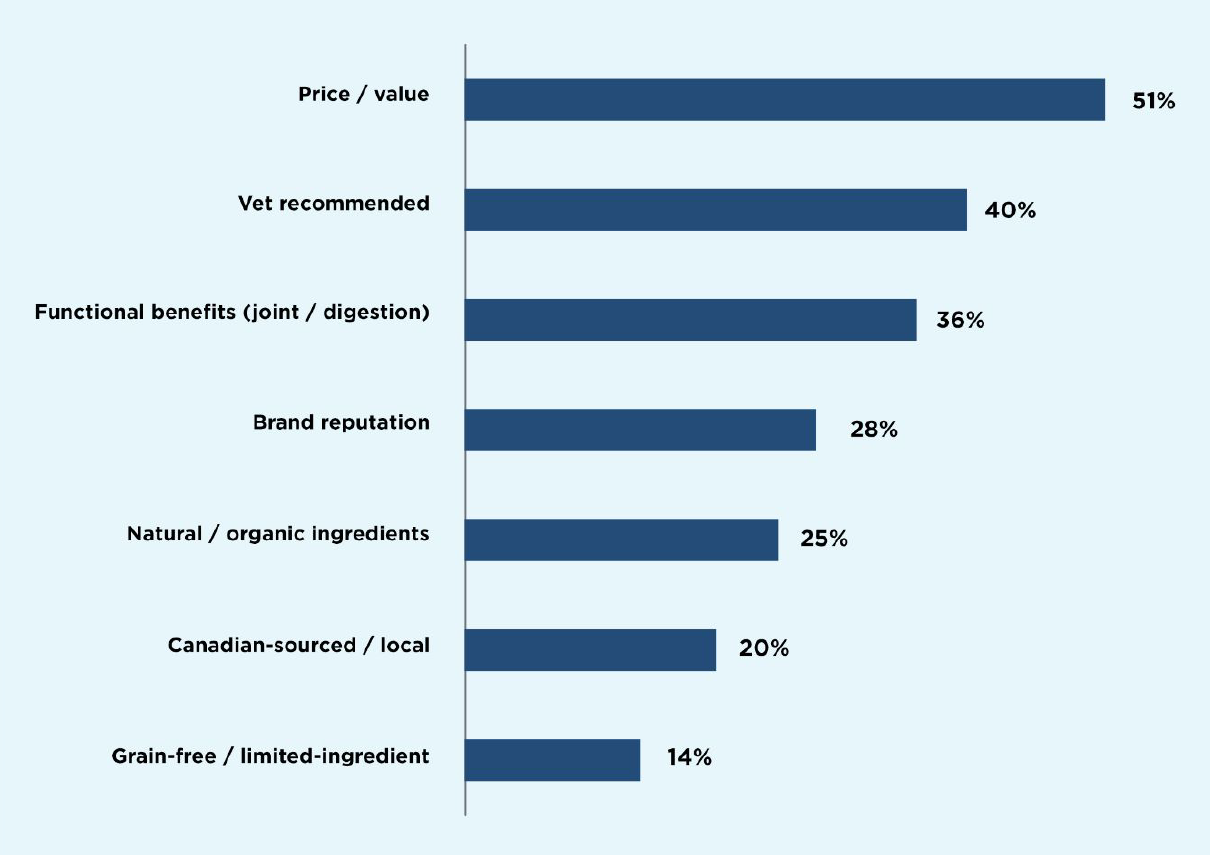
Top factors influencing pet food purchases:
Price/value (51%)
Veterinarian recommendation (40%)
Functional benefits such as digestive or joint support (36%)
Brand reputation also plays an important role.
🟥 Trust, Advice & the Rise of AI: Who Pet Parents Listen To & AI Use
The veterinarian remains the most trusted voice
Trusted sources for pet advice:
Veterinarians (62%)
Online reviews (11%)
Friends and family (10%)
Pet store staff and other sources still anchor decisions.
🟦 The Premium Pet Parent & Future Outlook: Attitudes Shaping the Market
The attitudes shaping where the market is heading
Owners spend beyond the basics on their pets
Many pet owners invest beyond food and supplies:
71% agree they spend on experiences for their pets.
58% believe pet insurance is worth the cost.
1 in 5 plan to add a pet in the year ahead
21% intend to add a new pet within 12 months.
10% expect to do so within six months.
Deep commitment: 3 in 4 would welcome another pet after a loss
75% would get another pet if one passed away.
22% say they would do so immediately.
When owners hesitate, the reason is the heart, not the wallet
Among those unsure about future pet ownership:
Emotional difficulty of loss (51%) is the leading concern.
Cost of ownership (23%) is a distant second.
🟨 Download the Report
Go Deeper Into the Data
Get the full Canadian Pet Shopping Report and explore all findings in detail.